INTERNAL MEDICINE TELECONSULTATION VS SPECIALTY REFERRAL:
Understanding the Right Support Option for Your Case Management

Supporting Veterinary Practices Through Expanding Access to Specialty Care
The veterinary industry continues to face significant challenges in access to specialty care. Increasing caseloads, workforce shortages, and rising client expectations are making referral decisions more complex and often delaying access to internal medicine expertise when it is needed most.
Many practices are evaluating how to best support patients who would traditionally benefit from internist involvement. This is where internal medicine telemedicine consultation can help bridge the gap.
What is an Internal Medicine Telemedicine Consultation?
An internal medicine telemedicine consultation is a submission-based case review performed by a board-certified internal medicine specialist.
The specialist reviews the full patient record, which typically includes:
- Patient history
- Laboratory results
- Diagnostic imaging and prior reports
A complete and detailed history significantly improves consult quality. This includes:
- Prior medications and response to therapy
- Diet trials and nutritional history
- Previous diagnostic testing
- Patient temperament and compliance factors
- Financial or logistical constraints impacting care
The more complete the clinical picture, the more targeted and actionable the recommendations.
From this information, a comprehensive clinical report is developed.
What’s Included in an Internal Medicine Consultation Report
Each consult provides a structured, problem-focused clinical assessment, including:
-
Interpretation of findings in clinical context
-
Identification and prioritization of major clinical problems
-
Disease-based differential diagnoses
-
Treatment recommendations
-
Suggested next diagnostic steps
-
Clinical prioritization to guide decision-making
The goal is to clarify not only what is present, but what is most clinically relevant and how to move the case forward efficiently.
Important Distinction
Unlike imaging interpretation services, an internal medicine consultation is:
- A full clinical case review, not limited to a single diagnostic modality
- Focused on clinical reasoning and case management strategy
- Conducted without direct client communication
- Supportive of the referring veterinarian, who maintains responsibility for physical examination findings and client communication
This allows the specialist to focus entirely on clinical synthesis and recommendations.
When Teleconsultation is Most Helpful
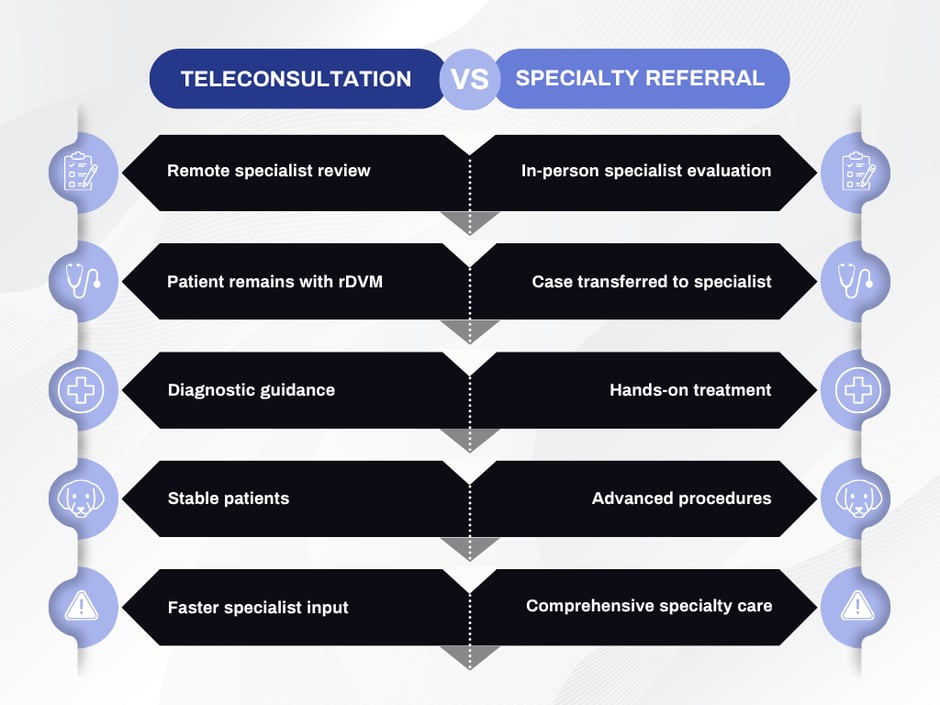
While teleconsultation and specialty referral serve different roles, both can be valuable components of patient care. Teleconsultation is often well suited for chronic disease management, endocrine disorders, diagnostic interpretation, treatment planning for stable patients, and clarification of next diagnostic steps.
In-person referral remains the preferred option for critically ill or unstable patients, cases requiring hospitalization or intensive care, advanced procedures such as CT, endoscopy, or biopsy, and situations requiring specialized monitoring or hands-on intervention. Importantly, telemedicine consultation can still provide valuable guidance early in the diagnostic process, helping veterinarians prioritize diagnostics, guide stabilization efforts, and determine when referral is most appropriate.
The Role of the Referring Veterinarian
The referring veterinarian remains central to patient care.
You maintain:
- Client communication
- Physical examination findings
- Treatment implementation
- Ongoing case oversight
The internal medicine specialist functions as a collaborative consultant, providing interpretation, guidance, and structured recommendations while supporting continuity of care within your practice.
Specialist Perspective
Dr. Laura Cousins on Internal Medicine Consultation and Case Management
We recently sat down with internal medicine specialist Dr. Laura Cousins to answer some of the most common questions from referring veterinarians about internal medicine telemedicine consultations and how they function in practice.

Frequently Asked Questions:
What does an internal medicine consult report include?
Reports include a structured clinical summary with interpretation of diagnostics, prioritized differential diagnoses, and clear recommendations for diagnostics, treatment, and case progression.
What makes a strong consult submission?
The most helpful submissions include:
- Complete patient history
- Medication and diet history
- Full diagnostic results
- Prior treatment response
- Clinical constraints (compliance, cost, temperament)
Why is patient history so important?
History provides critical context for interpreting diagnostics. A clear timeline of clinical signs and treatment response helps refine differentials and prevents key patterns from being missed.
What types of cases are best suited for telemedicine consults?
Telemedicine consults are particularly useful for endocrine disease, chronic illness, diagnostic interpretation, and treatment planning when baseline diagnostics are available.
Can telemedicine replace in-person referral?
No. Telemedicine is designed to complement, not replace, in-person specialty care. It is most effective for guidance and case planning in stable patients.
When should a patient be referred instead?
Referral is recommended for unstable patients, those requiring hospitalization, or cases needing advanced procedures or intensive monitoring.
How does a telemedicine consult differ from a traditional referral?
Telemedicine keeps the referring veterinarian as the primary clinician. The specialist provides recommendations without transferring case ownership.
How are diagnostic recommendations determined?
Recommendations are based on prioritizing the most clinically relevant differentials while minimizing unnecessary testing. The goal is efficient and targeted case progression.
What role does communication play in case management?
Ongoing communication between the referring veterinarian and specialist allows recommendations to evolve as new information becomes available and cases progress.
We're Here to Support Your Team
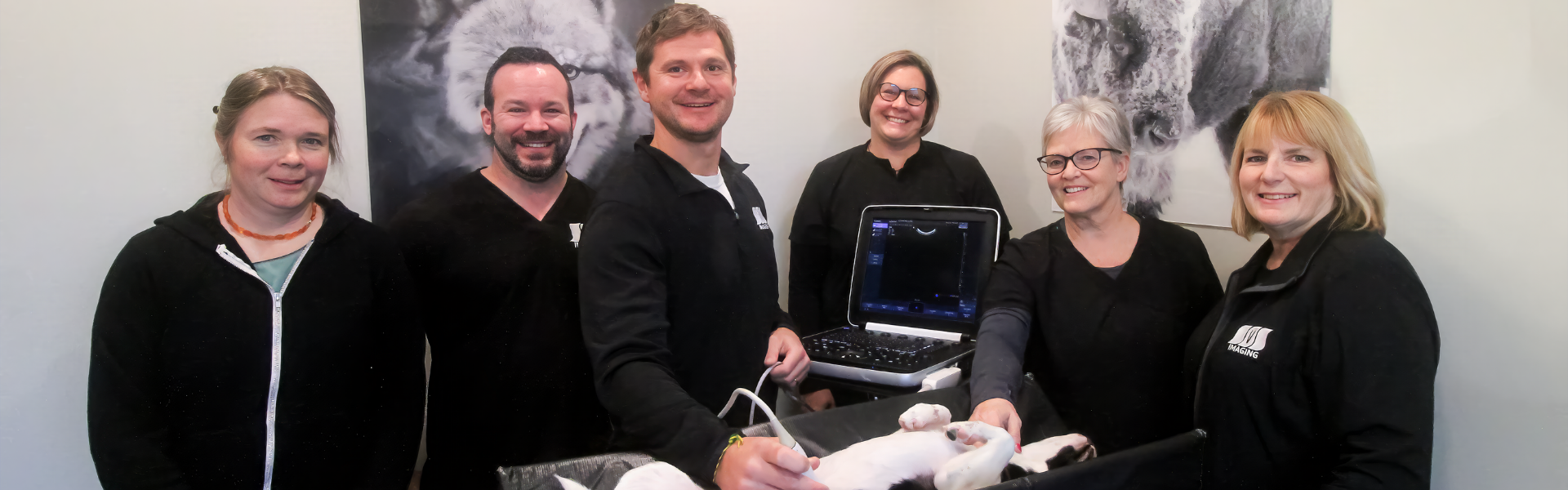
Our mission is to support primary care veterinarians by expanding access to internal medicine expertise and advanced diagnostics while maintaining continuity of care within your practice.
Whether you need imaging support, internal medicine consultation, or help working through a challenging case, our team is here as an extension of yours.
We value the opportunity to collaborate in delivering high-quality veterinary care.
.jpg) Fred Gromalak, DVM
Fred Gromalak, DVM
%20(4).png)
.png)
%20(5).png)
.jpg?width=30&name=Fred%20Head%20shot%20(web).jpg) Fred Gromalak, DVM : Jun 11, 2026, 12:35:16 PM
Fred Gromalak, DVM : Jun 11, 2026, 12:35:16 PM
.png)